
Compressor Runs Constantly But No Cooling
A compressor running 24/7 with warm cabinet air is a classic sign of low refrigerant charge due to a sealed system leak.
EPA 608 certified refrigerant leak detection, recovery, and recharge for refrigeration appliances. Serving Tacoma, Kent, Renton & the South Puget Sound Area.
When a refrigerator or freezer runs continuously but fails to cool, a sealed-system refrigerant leak is a frequent culprit. Appliance Experts 365 provides EPA Section 608 certified refrigerant leak detection, pressure testing, line brazing, and R-134a / R-600a system recharging across Tacoma, Kent, Auburn, Lakewood, and the South Puget Sound.
Sealed-system repairs require certified equipment and specialized training. Our technicians diagnose nitrogen pressure drops, locate micro-leaks with electronic detectors, braze copper/aluminum joints, and recharge refrigerant to exact factory specifications.
· Reviewed by the Appliance Experts 365 service team
If any of these sound familiar, it's time to have a technician take a look.
A compressor running 24/7 with warm cabinet air is a classic sign of low refrigerant charge due to a sealed system leak.
Partial frosting on the top entry tube of the evaporator coil indicates low pressure and refrigerant loss.
A continuous hiss near the copper lines can indicate escaping refrigerant from a pinhole leak. Occasional gurgling is normal refrigerant flow and is not a fault.
Refrigerant carries compressor oil; dark oily residue around solder joints or compressor fittings marks a leak location.
Gradual loss of cooling over days or weeks points to a micro-leak in the evaporator coil or condenser tubing.
Excessive run-time and high-temperature alarms are not leak codes by themselves, but once fans, defrost and the condenser check out, a sealed-system leak is the next thing we test for.
Photos taken by our technicians on real jobs across the South Sound. We photograph the appliance and the work, never people or homes.
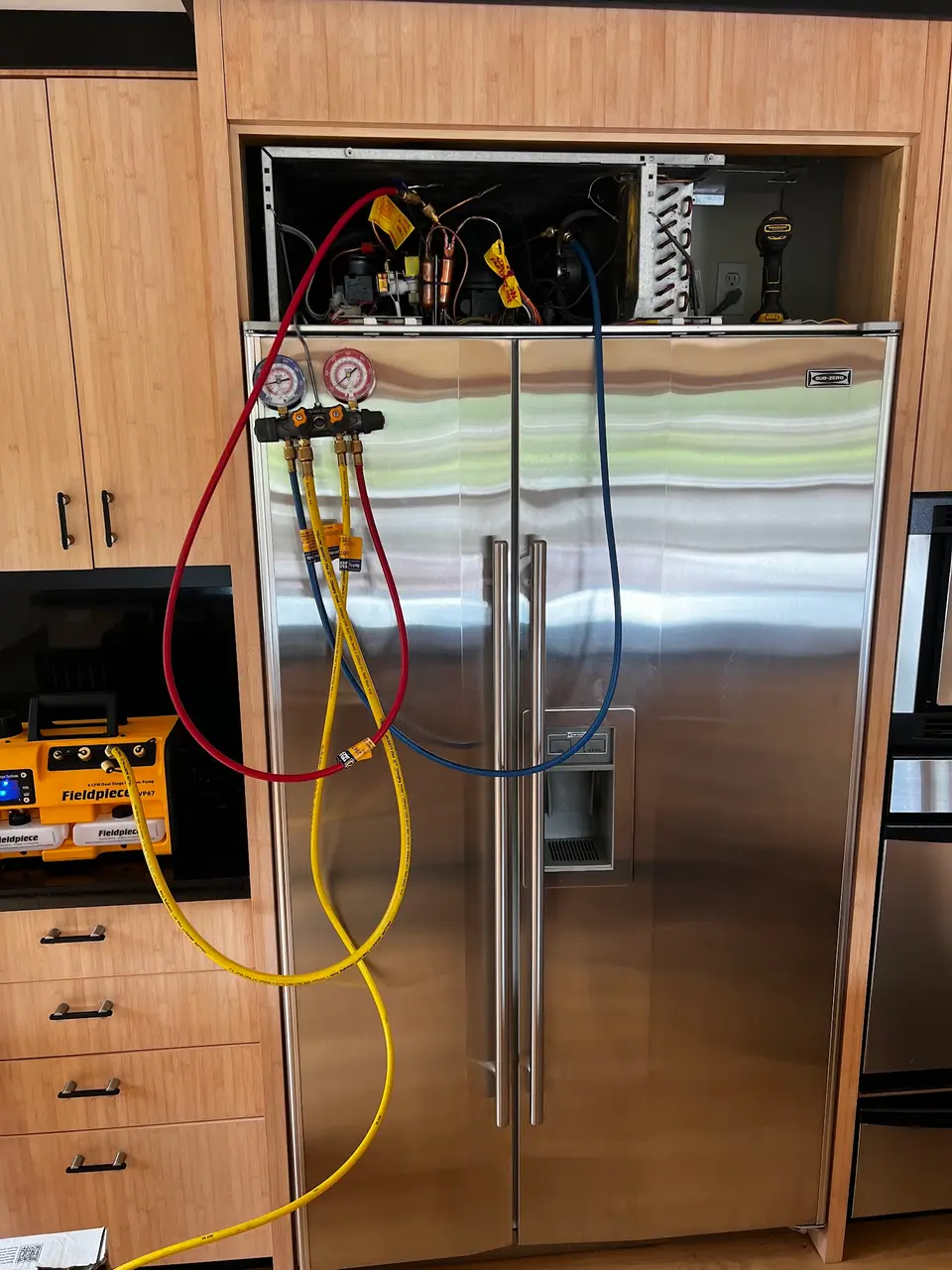
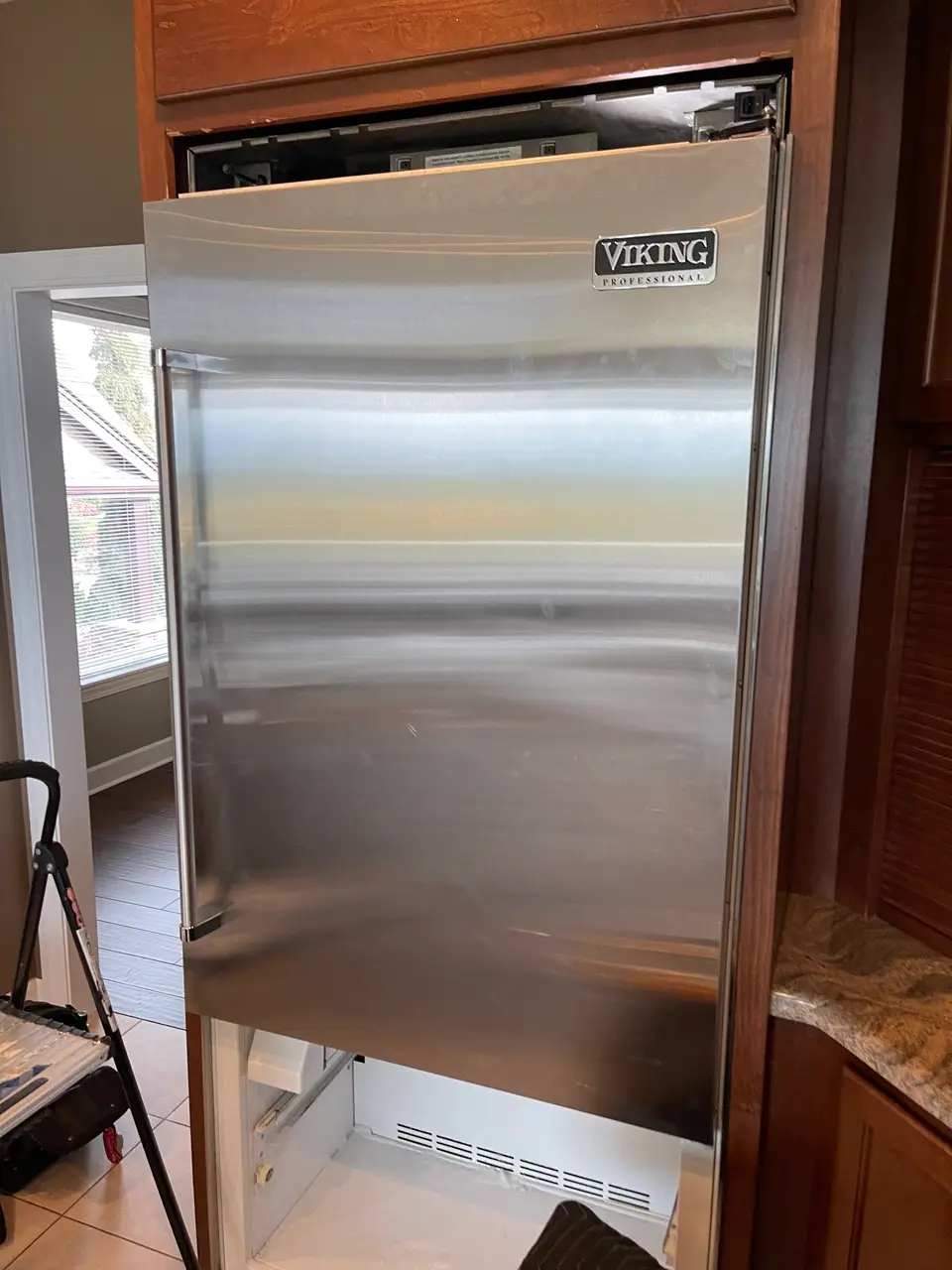
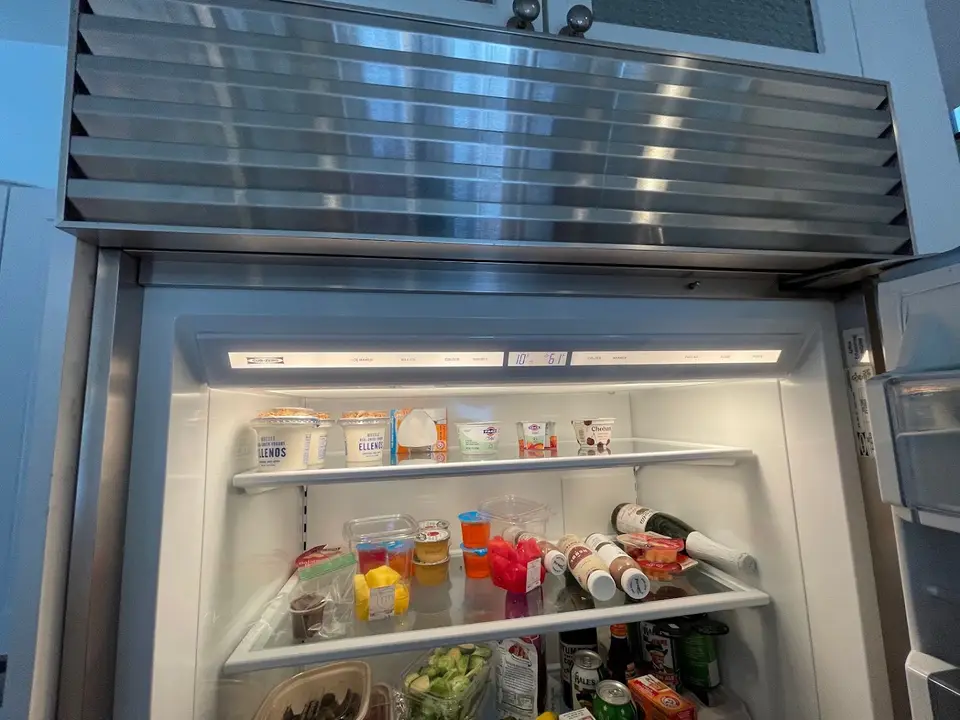
Sealed system work begins with a pressure diagnostic by an EPA 608 certified technician: brazing on a process (access) valve, recovering the remaining refrigerant into a recovery cylinder, and pressurizing with dry nitrogen to locate leaks with electronic sniffers and micro-bubble solution.
Once located, we braze new copper tubing, replace damaged evaporator coils or filter driers, pull a deep vacuum down to 500 microns with a multi-stage vacuum pump, and weigh in exact R-134a or eco-friendly R-600a refrigerant charge.
Every sealed system repair includes complete leak repair, filter drier replacement, vacuum evacuation, precision charge weigh-in, and a parts-and-labor warranty. Our technicians hold EPA Section 608 certification.
We repair sealed systems on Sub-Zero, Thermador, Viking, Miele, Monogram, Dacor, Bosch, GE, LG, Samsung, Frigidaire, KitchenAid, and Whirlpool refrigerators and freezers.
Refrigerant & freon leak repair with Appliance Experts 365 is priced the same way everywhere we work: a diagnostic fee quoted before a technician is dispatched, credited toward the repair; a written, itemized parts-and-labor quote that you approve before any work starts; and a parts-and-labor warranty, with the term stated on the quote, on every completed repair. There is no separate travel charge inside our service area, and if a repair would cost half or more of the price of a comparable new appliance we tell you before you decide.
Diagnostic visit. The diagnostic fee is quoted before a technician is dispatched, and it is credited toward the repair when you approve the written quote.
Written quote first. After the diagnosis you approve an itemized quote covering parts and labor before any repair begins. The price you approve is the price you pay.
Warranty. Every completed repair is backed by a warranty on both parts and labor; the term is stated on your written quote.
Honest advice. If the repair would cost half or more of the price of a comparable new appliance, we say so before you commit.
No manufacturer publishes a dedicated "refrigerant leak" code. These are the cooling-performance alarms that most often turn out to be a sealed-system problem once fans, defrost and the condenser have been ruled out.
| Code | Brand | Appliance | What It Means | What We Do |
|---|---|---|---|---|
| EC40 | Sub-Zero
Premium
| Built-in Refrigerator | Excessive compressor run time: the unit ran more than 24 hours without reaching its set temperature. Not a leak code by itself; a dirty condenser or failed fan is ruled out first. | We clean the condenser, confirm fan operation, then check frost pattern and operating pressures. A sealed-system leak is confirmed only by pressure testing before any refrigerant work. |
| SERVICE / VACUUM CONDENSER | Sub-Zero
Premium
| Built-in Refrigerator | Condenser temperature warning. Usually a clogged condenser or stalled condenser fan; persistent after cleaning, it can point to a sealed-system fault. | We clean the condenser coil, test the condenser fan, reset the indicator, and pressure test the system if the warning returns. |
| HI | Viking
Premium
| Built-in Refrigerator | High cabinet temperature alarm. Causes range from a door left open or a failed evaporator fan to loss of refrigerant charge. | We rule out door seals, fans and defrost first, then test sealed-system pressures to confirm or exclude a leak. |
| Er 22 | LG | Refrigerator | Compressor relay or compressor start fault on the main board. The compressor may not be running at all, which mimics a refrigerant problem. | We test the compressor relay and board output, then the compressor itself; sealed-system testing follows only if the compressor runs but does not cool. |
| No code, runs constantly | All brands | Refrigerator / Freezer / Wine Cooler | Most refrigerant leaks produce no error code. The symptom is a compressor that runs nonstop, a partially frosted evaporator and cabinet temperatures that slowly drift upward. | We check the frost pattern on the evaporator, measure compressor amperage and system pressures, and locate the leak with an electronic detector before quoting the repair. |
No matching error codes found
Our technicians diagnose unlisted codes on-site. Call us at +1 (206) 427-7323 and read us the code.
* Error codes vary by model generation and production year. A technician verifies the fault in person before replacing any part.
Signs include the compressor running constantly without cooling, frost accumulating only on the top bar of the evaporator coil, oily spots near copper joints, or hissing sounds near the back.
Yes. Our technicians hold EPA Section 608 certification, the federal credential required to recover, recharge and otherwise handle regulated refrigerant in household systems.
On built-in or luxury refrigerators (Sub-Zero, Thermador, Viking, Monogram), a sealed-system repair is usually far less than the cost of replacing the unit, so it is almost always worth doing when the cabinet and compressor are otherwise sound. On an older budget refrigerator, the same repair can cost half or more of the price of a comparable new unit, and we will say so before you commit.
We service all modern residential refrigerants including R-134a, eco-friendly R-600a (isobutane), R-290 (propane), and legacy systems.
We evacuate remaining refrigerant into a recovery tank, pressurize the system with dry nitrogen to locate pinhole leaks, braze copper tubing, replace the filter drier, pull a 500-micron deep vacuum, and weigh in exact factory charge.
Partial frost patterns (a ball of ice on the entry tube while the rest of the coil is bare) indicate low refrigerant pressure and gas loss.
A complete sealed system repair typically takes 2 to 3 hours on-site, including leak testing, line brazing, vacuum pull-down, and precise charge weigh-in.
Yes. Heavily clogged condenser coils restrict heat dissipation, causing warm cabinet temperatures and continuous compressor operation. We clean condenser coils first during diagnostic testing.
Running low on refrigerant deprives the compressor motor of cooling suction gas, eventually overheating and burning out the compressor motor windings.
Yes. All sealed system repairs include a written warranty covering parts, brazing labor, filter driers, and refrigerant recharge.
No. Residential refrigerators are sealed systems with no service ports, the charge is measured in grams rather than pounds, and federal law requires EPA Section 608 certification to handle refrigerant. Topping up without fixing the leak also just delays the same failure. A certified technician repairs the leak, replaces the filter drier, pulls a vacuum and weighs in the exact charge.
It depends on the age and quality of the unit. On a refrigerator under about eight years old, or any built-in or premium model, a sealed-system repair is usually worth it. On an older budget refrigerator the repair can cost half or more of the price of a comparable new unit, and we will tell you that before you commit.
In-home refrigerant & freon leak repair in Tacoma and 19 more cities across Pierce County and South King County. Pick your city for neighborhoods, ZIP codes and local notes.
Fill out the form below and a technician from our licensed, insured team will call or text you within 1 business hour. Or call now: +1 (206) 427-7323.